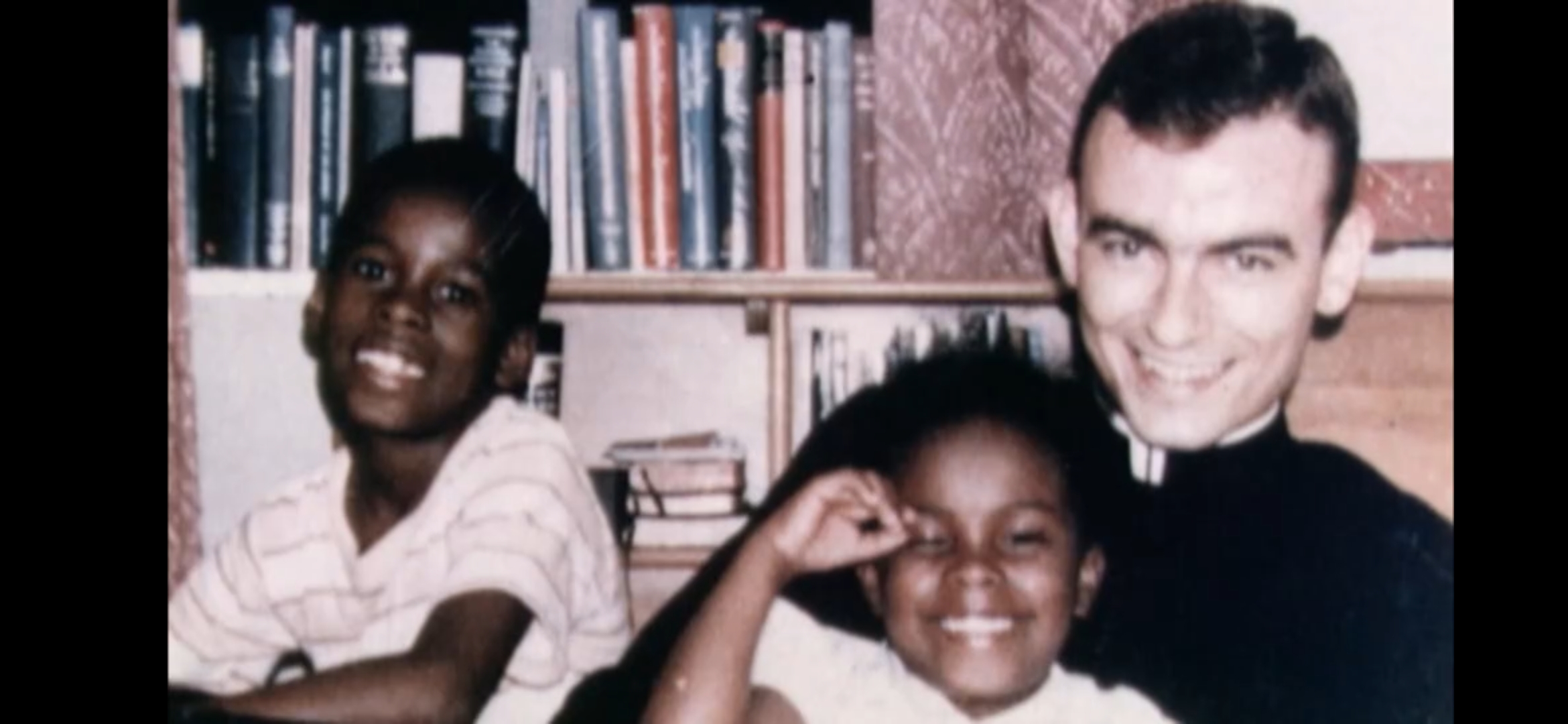
Last month I attended the 60th annual pilgrimage in honor of Jonathan Myrick Daniels. It marked 60 years since the murder and martyrdom of Daniels.
Jonathan Myrick Daniels was a twenty six year old Episcopal Theology Seminary student. He was killed in notoriously violent “Bloody Lowndes” County, Alabama in 1965. When Dr. King issued the call to Northern civil rights workers to come South, Daniels answered. So did Richard Morrisroe, a white Catholic priest and members of SNCC (Student Nonviolent Coordinating Committee).
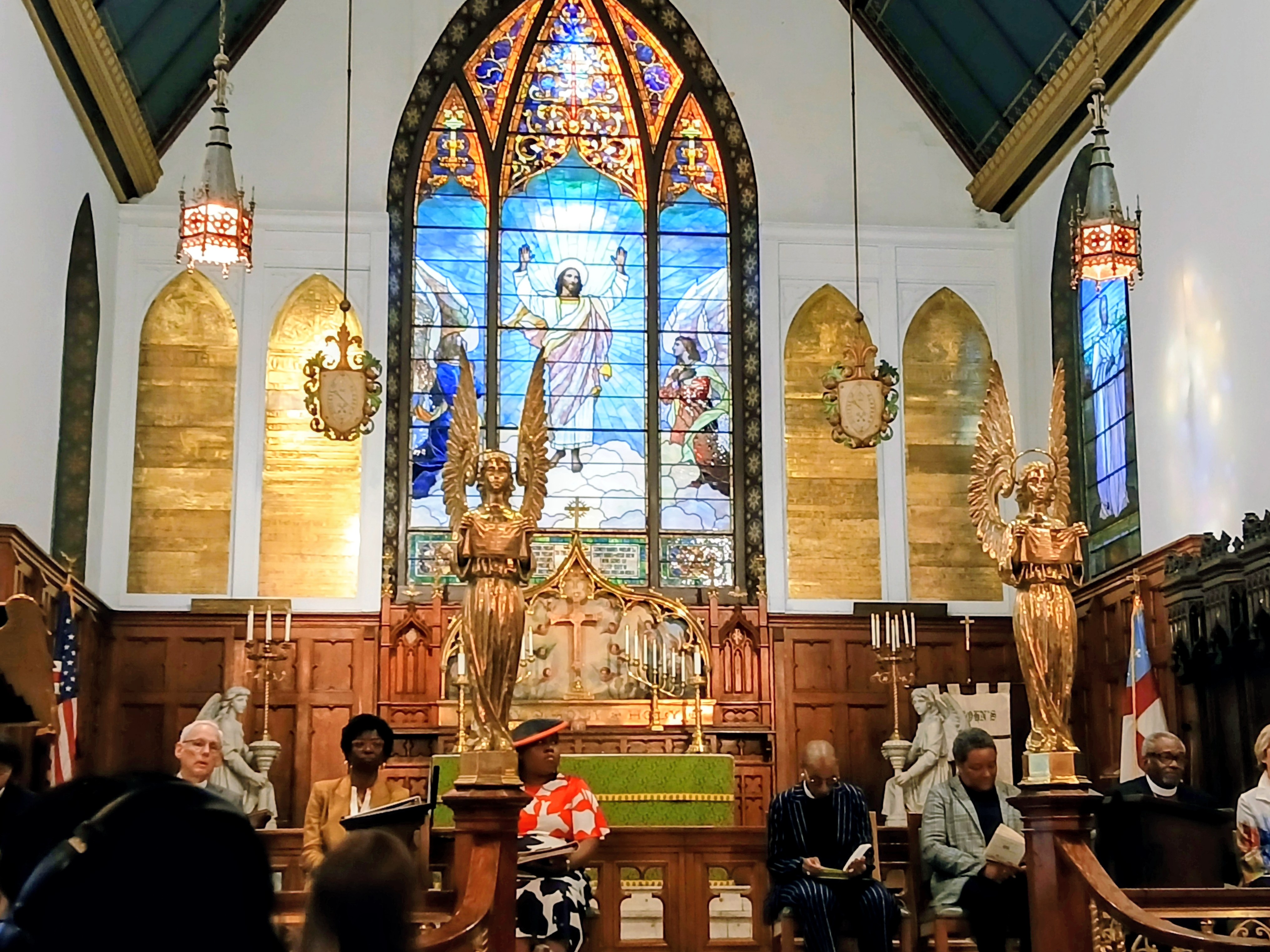
I was not familiar with Jonathan Daniels until I started working on a project about Lowndes County. Out of curiosity, deep admiration, and respect I decided to participate in the celebration of life. There was a service at St. John’s Episcopal Church the evening before the pilgrimage. The opera singer brought everyone to tears.
The next morning we gathered at the Courthouse. I wore my favorite five finger shoes, hydrated, and dressed appropriately for the weather. Prepared, I thought….
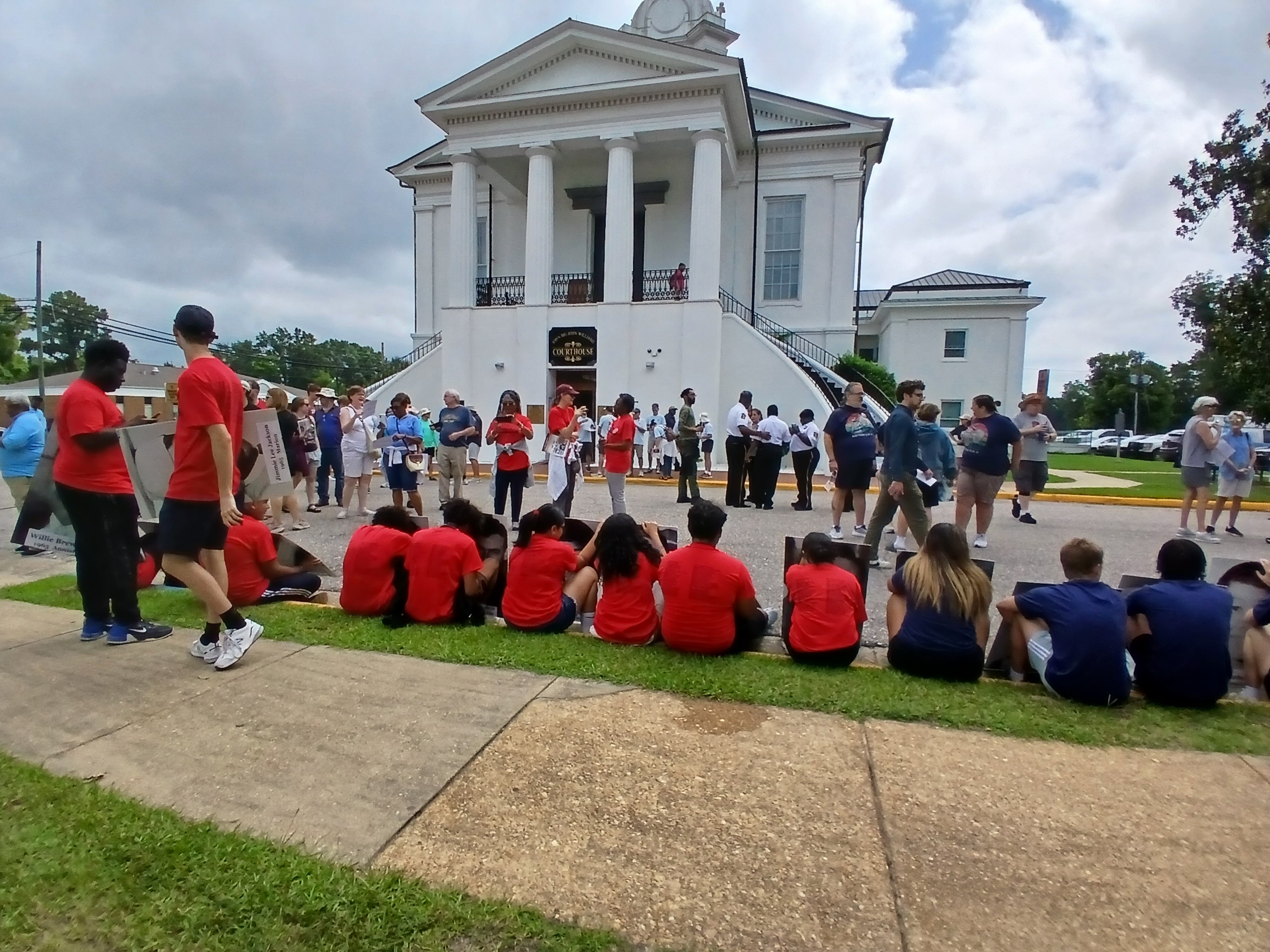
The priests opened with some words about Jonathan, why we were gathered after 60 years and why we would continue to gather in his honor. The pilgrimage also recognized additional Alabama Martyrs.
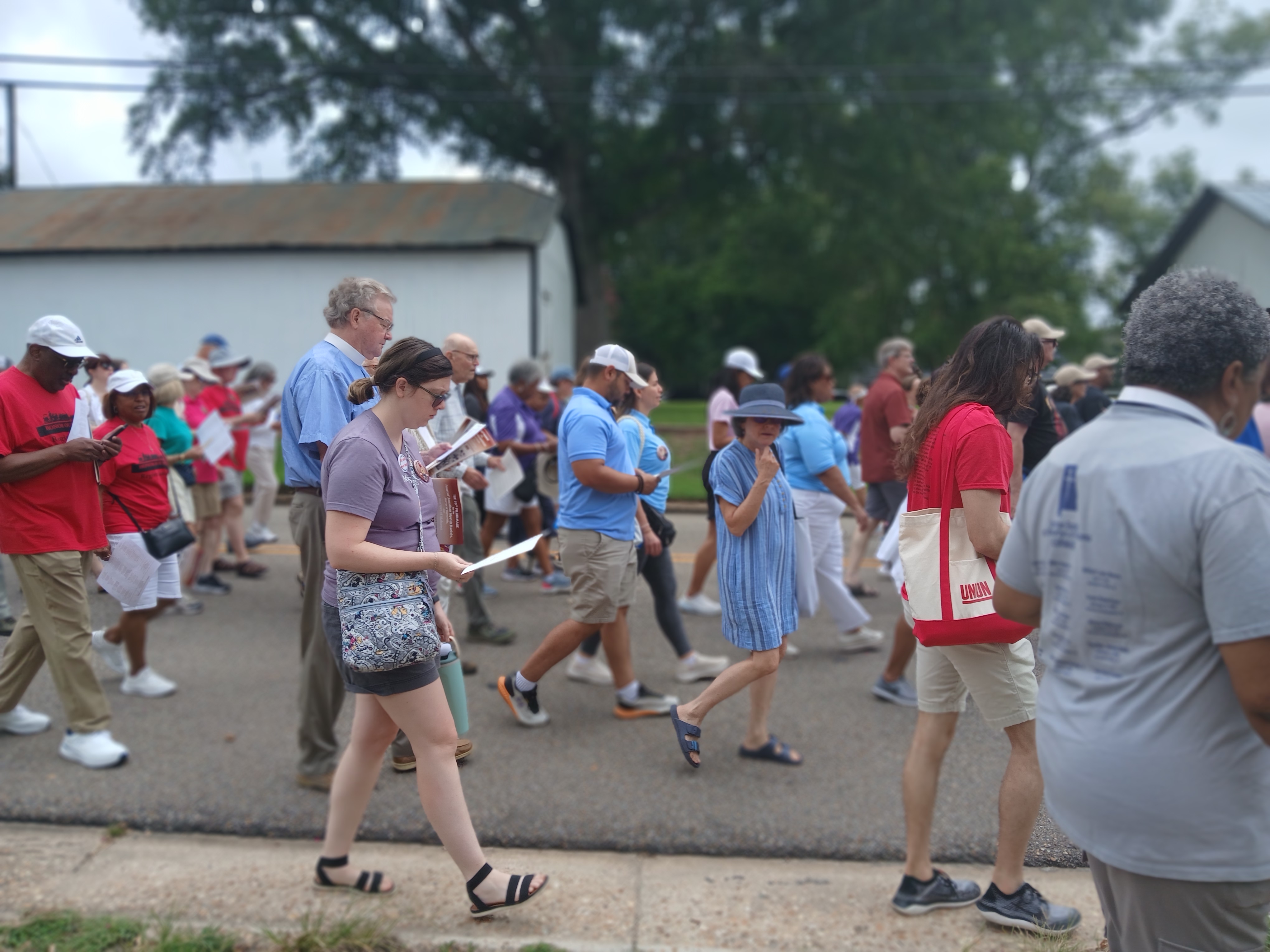
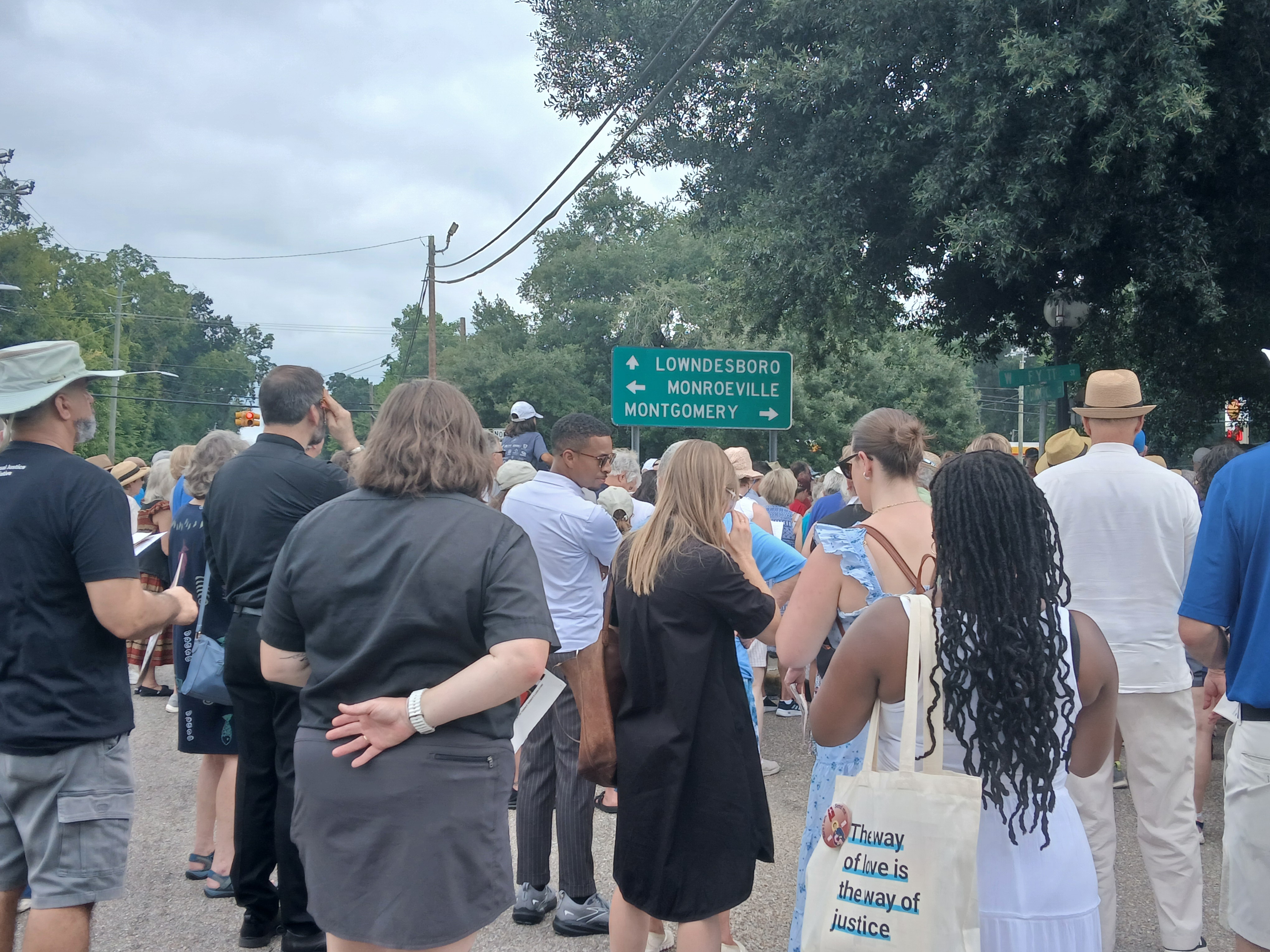
The short journey began. We walked and sang songs of freedom.
We stopped at the Hayneville Jail.
The civil rights workers had been arrested at a demonstration in nearby Fort Deposit. Daniels, Morrisroe, Joyce Bailey, and a seventeen year old Ruby Sales were put on a garbage truck and taken to jail. They stayed 6 days in the Hayneville jail under conditions Sales described as “barbaric.” Guards threatened to abuse them physically and sexually. Ruby developed an ulcer, was sick and denied medical care. She and Jonthan passed notes to each other during the stay, somehow. Women and men were kept on separate floors. After a week the jailer abruptly demanded “Get out of here. You’re free.”

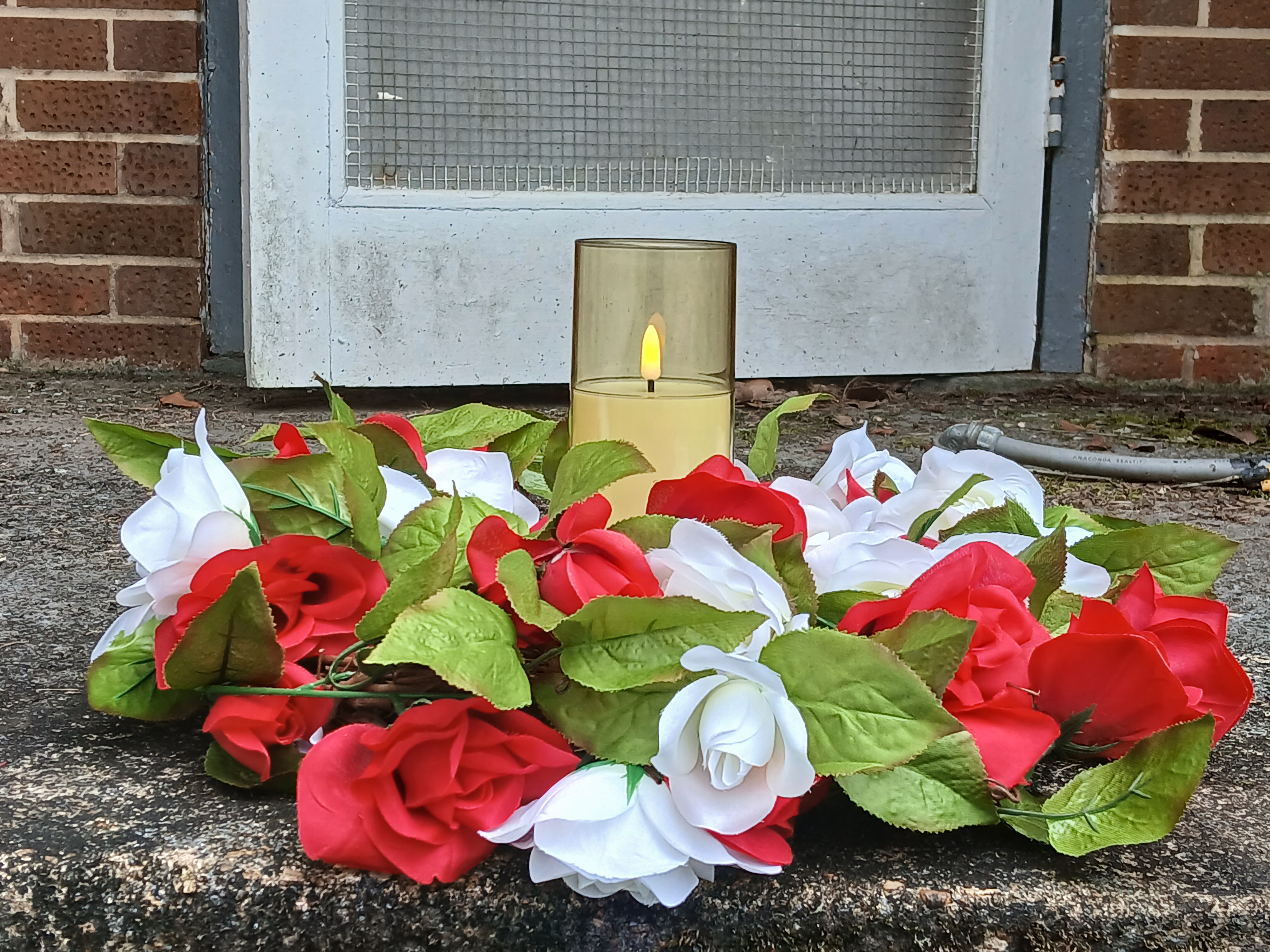
A wreath was laid at the jail.
After their release from custody the group walked to Varner’s Cash Store to get soft drinks. That’s not what they got. The gunman snarled at Ruby, “Bitch, I’ll blow your brains out.” She said of the incident “the next thing I knew, I was pulled backwards and I fell, literally fell. And Jonathan – I heard a shot, and it was Jonathan. He shot Jonathan. Jonathan never made a sound.” The blast meant for Ruby struck Jonathan in the chest. The wound proved fatal but his spirit, eternal.
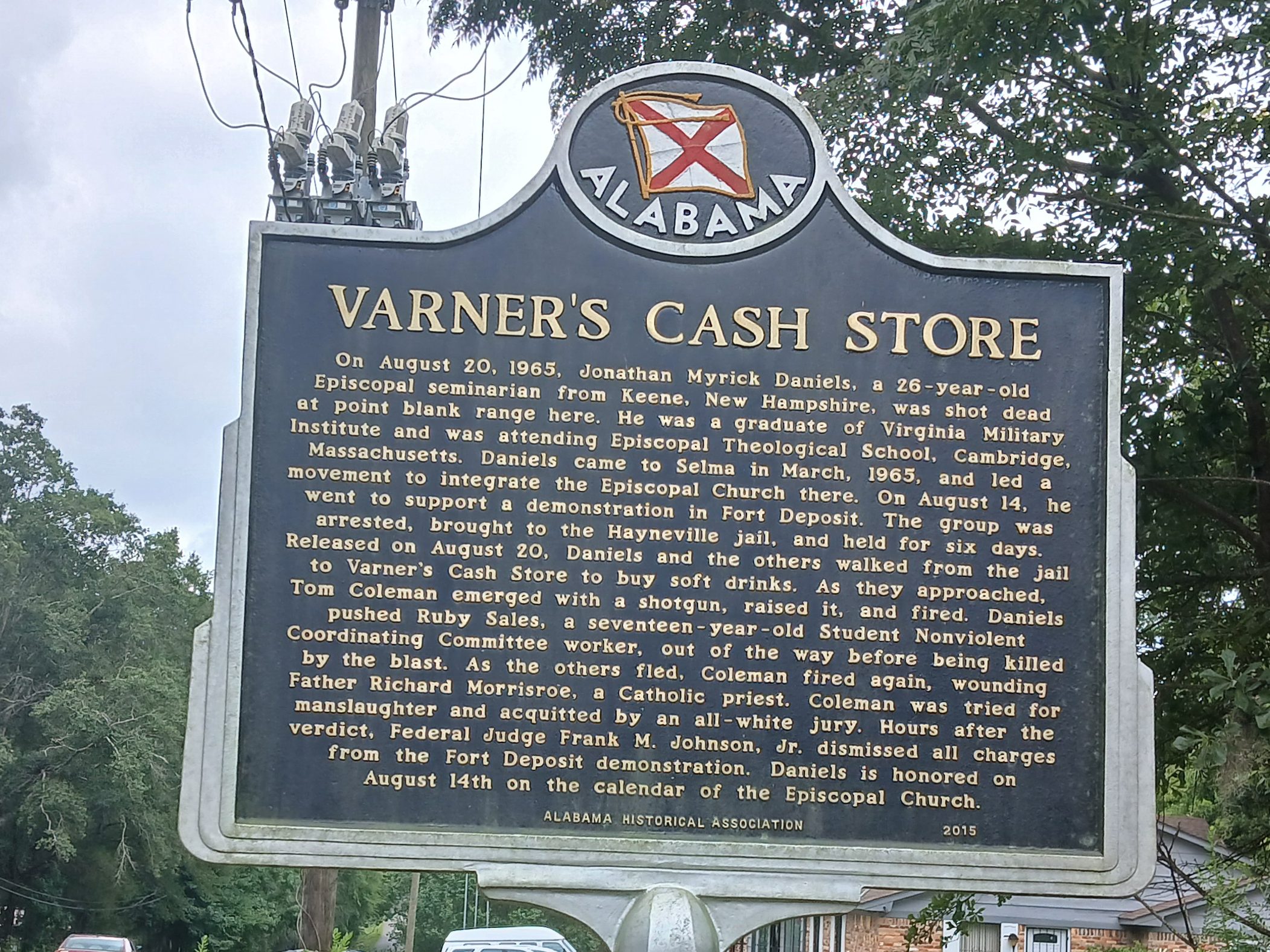
Father Morrisroe was shot in the back but miraculously survived. The murderer threatened to shoot anyone who attempted to help Father Morrisroe even as he cried out for help while blood seeped from his body onto the ground. Morrisroe was transported to the hospital “in a hearse on top of Jonathan’s dead body.” Hours passed as he laid in the hospital hallway. A call, believed to be from a military official, prompted aid to be rendered. His surgery lasted five hours.
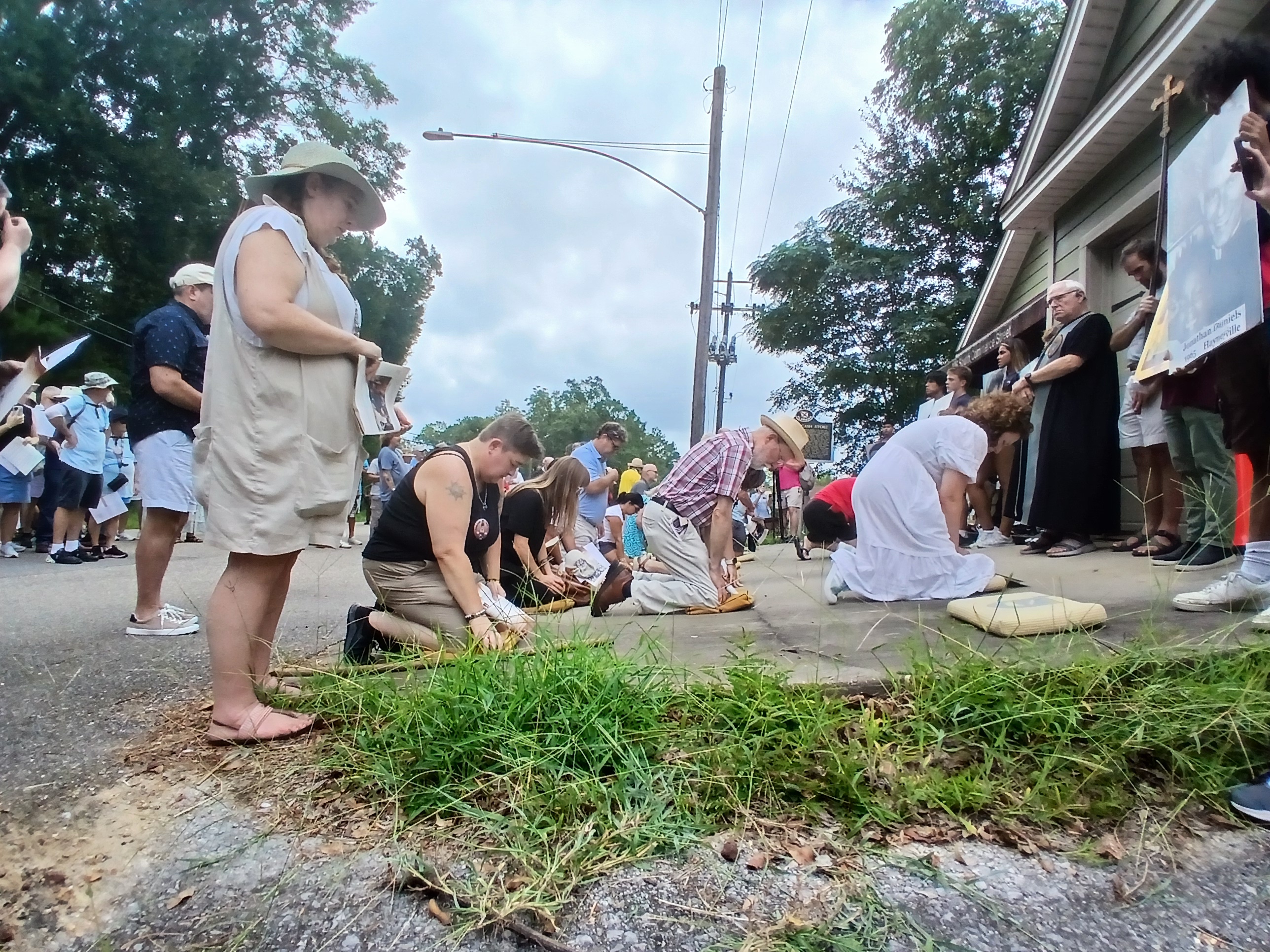
Pilgrims paid their respects at the scene of the crime.
Most people had walked the block or so back towards the courthouse waiting for the procession inside to begin. I hung back to get a picture of the Cash Store and then reunited with the group.
There was one pilgrim left at the site. I waited until she was done to take a picture of the store. Then I got home and looked through the pictures. There it was. The accidental image. I did make it black and white…

We made our way back to the courthouse and gathered inside. At this Lowndes County courthouse, the terrorized civil rights workers testified. Sales said “The hostility hung like icicles in the courtroom.” The shooter (whose name I have intentionally not called) was acquitted. The case was over but the weight of the loss was not. Ruby and Joyce were physically unharmed but emotionally traumatized and guilt ridden. Prior to the protest, Sales said there was “a great SNCC debate that went on for hours and hours” to talk about strategy and participation of Daniels and Morrisroe. Ruby initially thought it was too dangerous. Daniels and Morrisroe were committed. Stokely Carmichael did not want to stand in the way of their activism. Not only did they lose a fellow civil rights worker, they lost a friend. Carmichael took it especially hard. The “collective grief” increased the determination of the workers. They pressed forward in the absence of justice. Ruby followed in Jonathan’s footsteps and became a theologian.
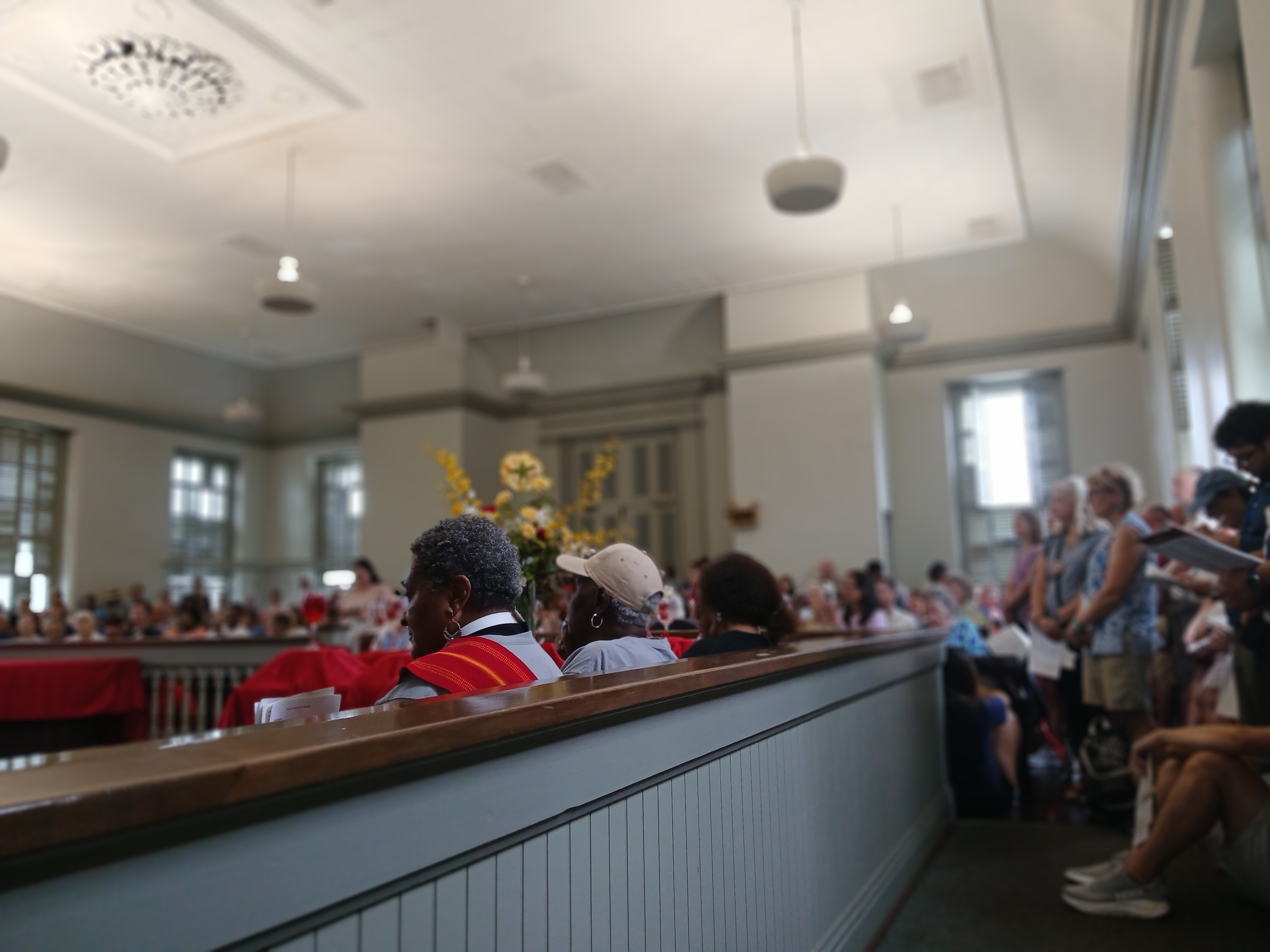
At the Antebellum courthouse where justice was denied, there was an excellent sermon about the long walk to freedom. There were prayers, communion, and community. The name of each martyr was called. A bell tolled for each lost soul. Josephine Bolling McCall lit a candle for each martyr including her father Elmore Bolling. He was murdered in Lowndes County when she was a little girl. She founded The Elmore Bolling Initiative in his honor (we will revisit this in a future post).
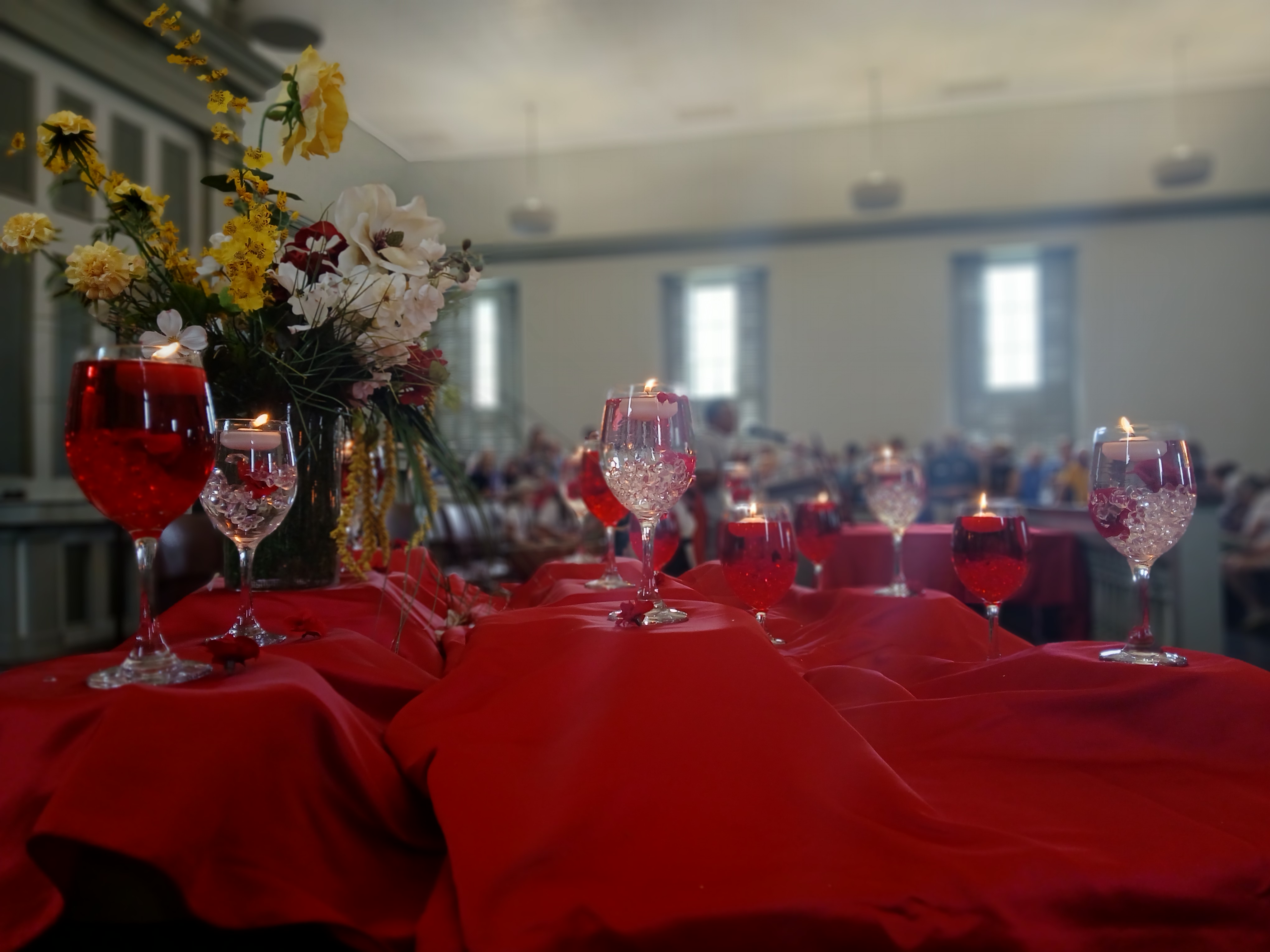
So yes, I thought I had prepared but I neglected to adequately emotionally prepare myself. It was an incredibly somber experience that felt hauntingly recent in time. It was heavy in a way I have not yet been able to articulate. It’s something about the depth of the injustice reaching sixty years past, existing in the present, and continuing into the future. It’s very unsettling. But also to experience in that moment, in that place, with strangers, a collective grief…it gives me hope that at some point the dust of our society will settle and maybe we too can find something we can agree on. All of us present were in agreement. A wrong had been done, Jonathan Daniels willingly laid down his life for Ruby Sales and the cause of civil rights, and we should not forget his sacrifice. In 1994, Jonathan Daniels was honored as a Martyr by the Chapel of Canterbury Cathedral in Canterbury, England.
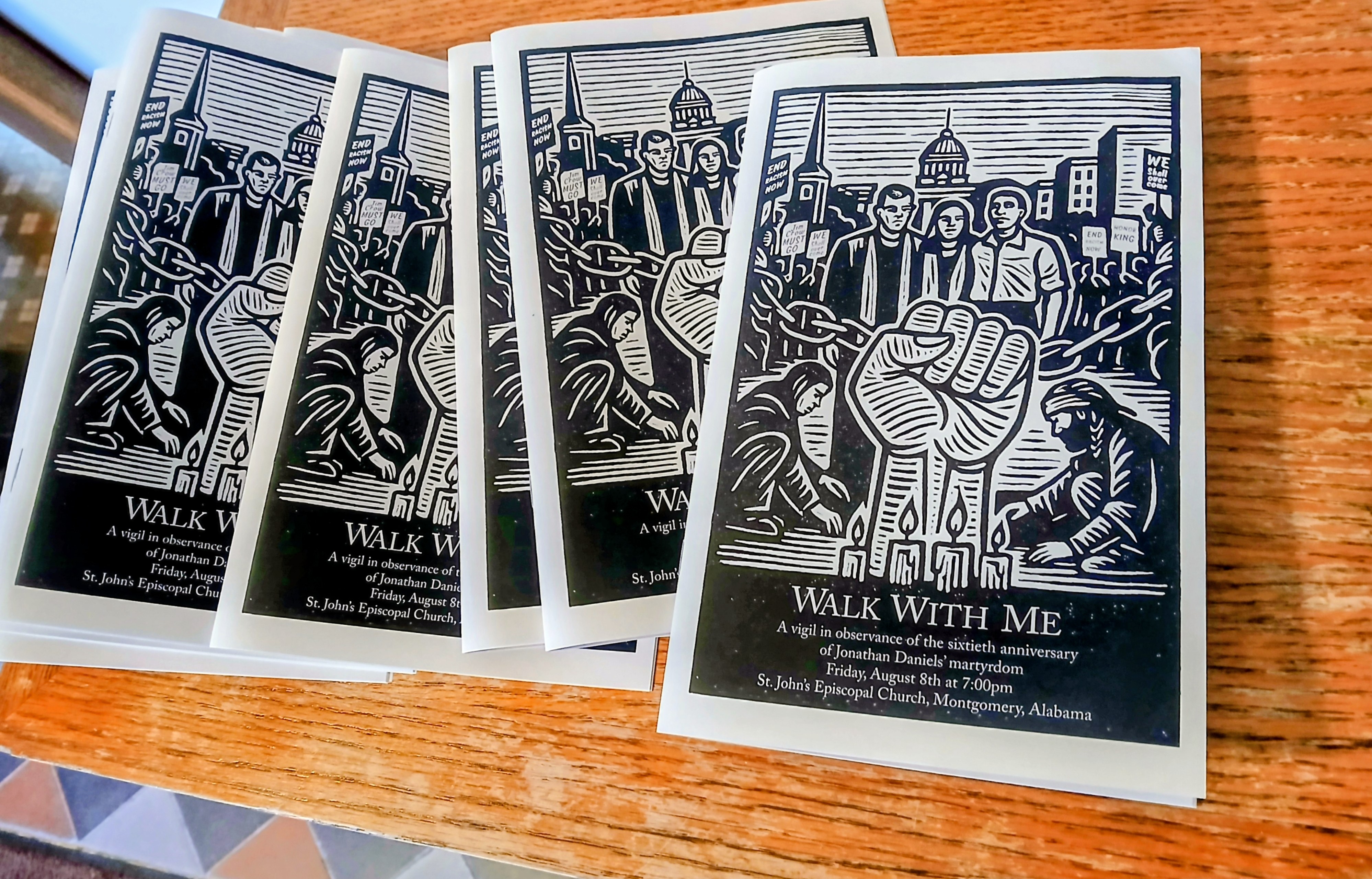
It was a sad but sacred celebration. It took two days of bed rest to get up and moving again. Next year I’ll be better prepared. The more I study and grow, the more I believe in Dr. King’s dream. It was not some pie in the sky dream that he concocted out of nowhere. Yes he was a civil rights activist but had access to information and divine understanding that most of us do not. Yoga Sutras say there is only manifest and unmanifest. We cannot bring into manifestation what we cannot imagine. Dr. King saw the vision and shared it with the world. It’s up to us to create the conditions so the dream can come into being.
Click here to watch Ruby Speak about this event: Ruby Sales: How we can start to heal the pain of racial division | TED
Sources:
NHPBS Presents | Here Am I, Send Me: The Journey of Jonathan Daniels | PBS


Leave a Reply