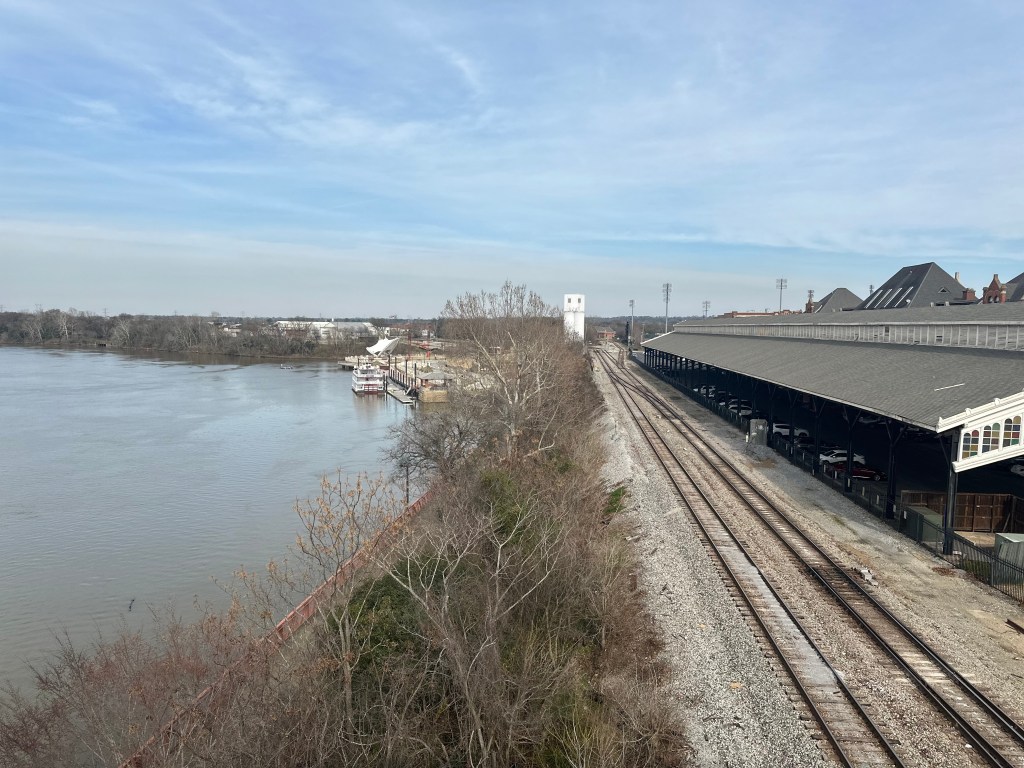
The Alabama River is where I go to water my roots, photosynthesize, and clear my mind. So the newspaper headline “Negro Hermit, Who Lived 20 Years on River Bank, Is Dead” caught my attention. As I looked closer, he lived in Montgomery. The river was the Alabama. His home and my home away from home, were one in the same.
Who was this man? Back to the newspapers I go, surely there had to be more. There was so much more…
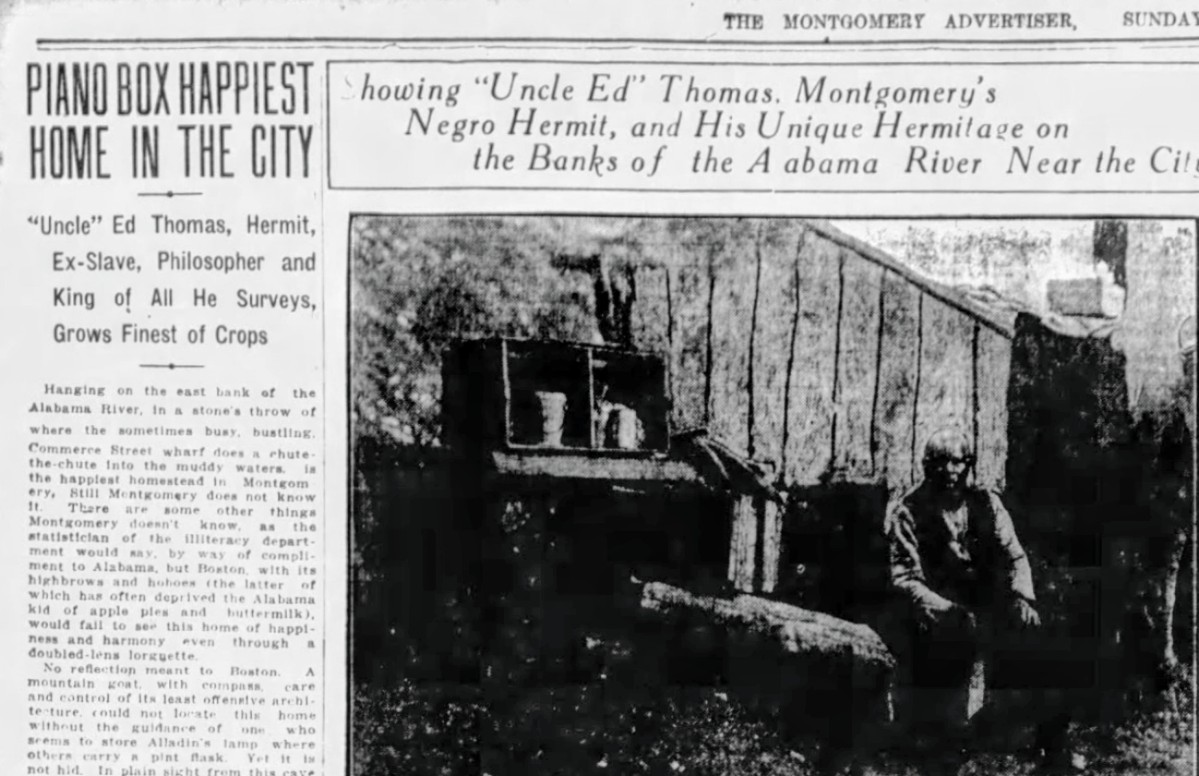
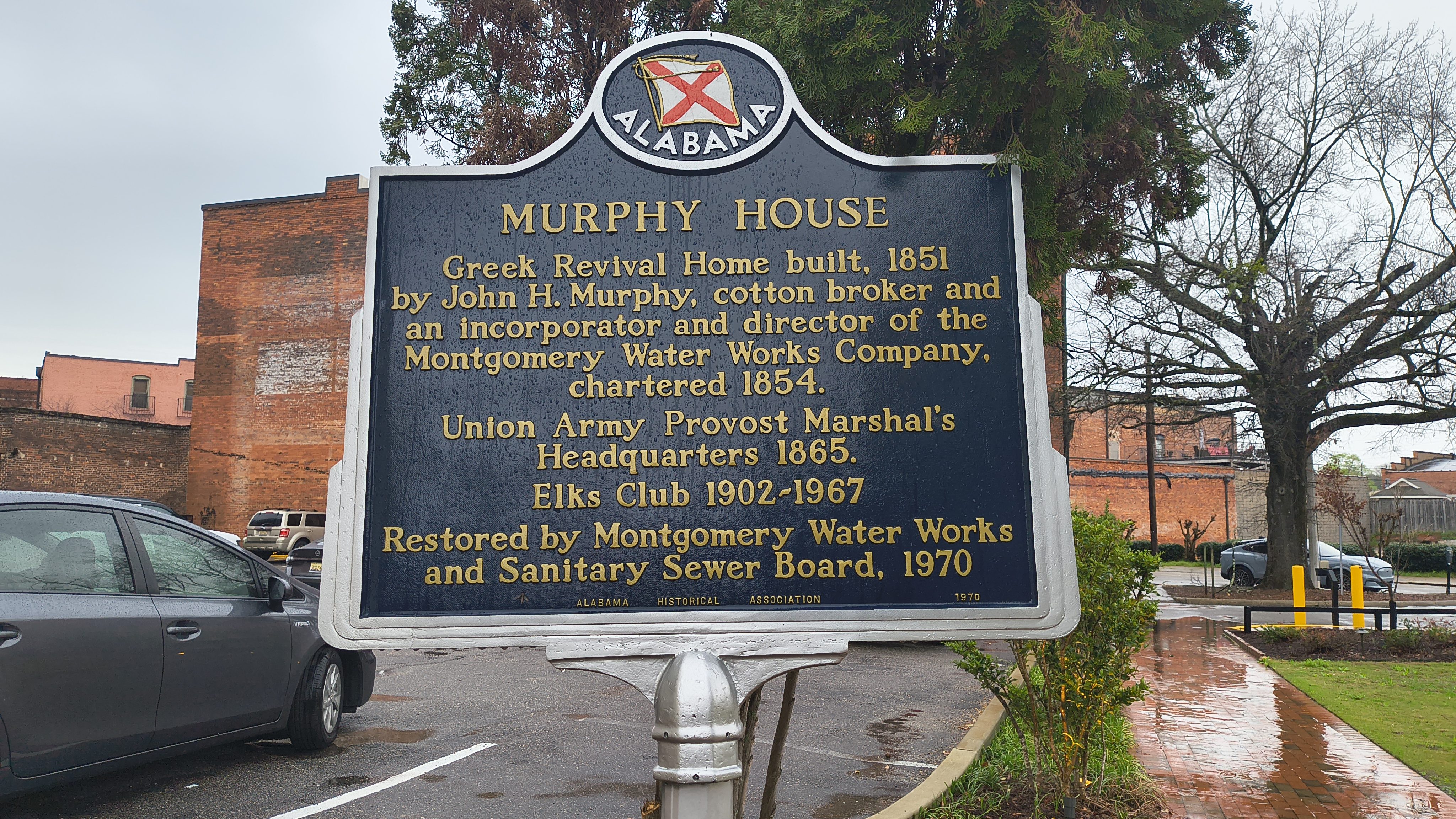
He was more than just a “hermit.” Ed Thomas was representative of the failed promises of America and the increasing economic distance between those who have, and those who have not. I walk past this house everyday and never bothered to look. I know what it represents. But then, I read that Ed lived across the railroad tracks within two blocks of one of Montgomery’s grandest mansions. That prompted me to look.
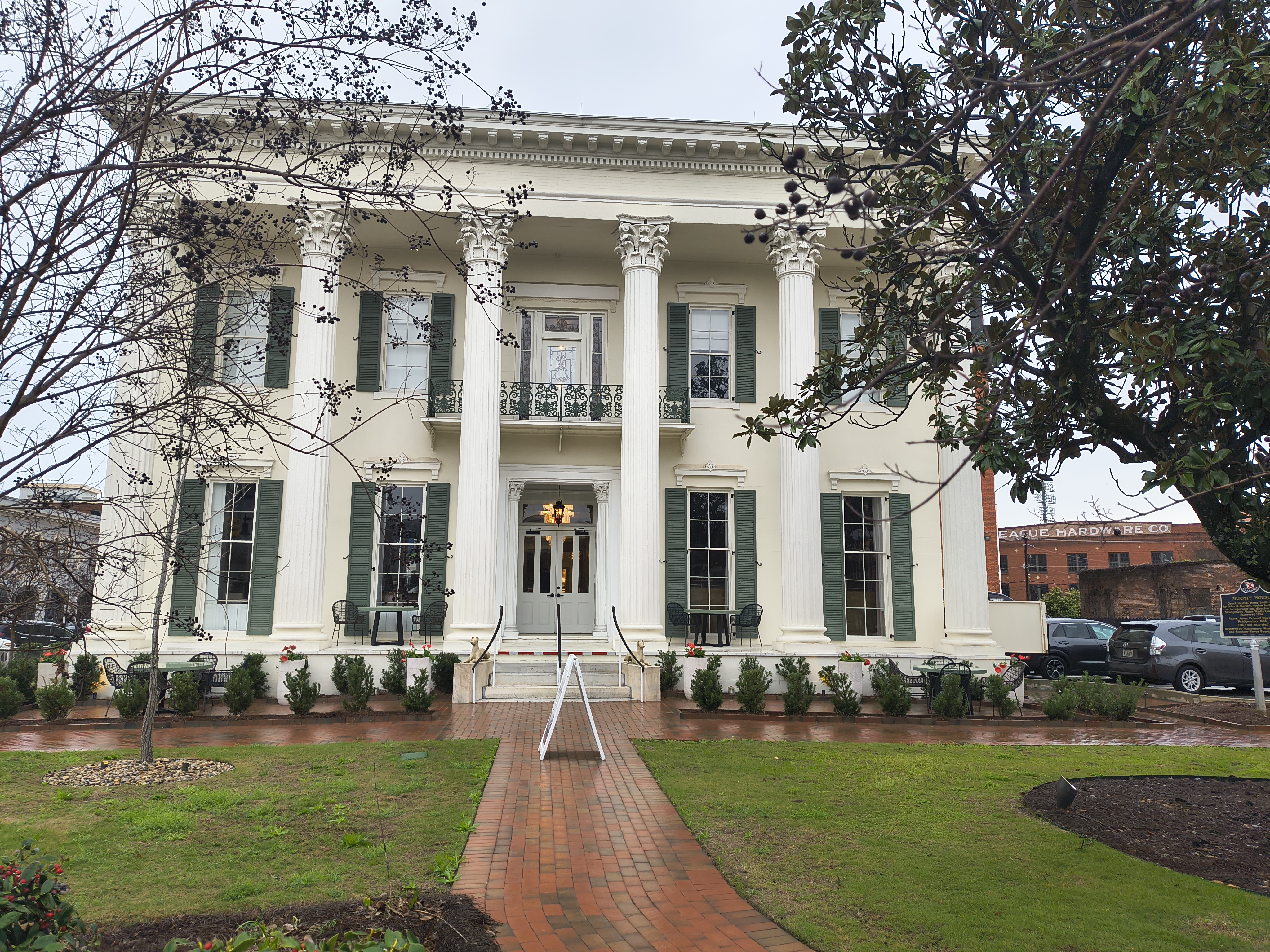
Alone in life, Thomas cobbled together a life as best he could at the river’s edge. Newspapers regarded him as a representation of the old South. “The old negro is a relic of antebellum days, and will soon join a host of others of his kind who have passed into the great beyond.” “Uncle Ed is a typical ‘squatter,’ the paper said. He was one of untold numbers of ex-slaves and poor people to seek refuge wherever they could find it, including dumps.
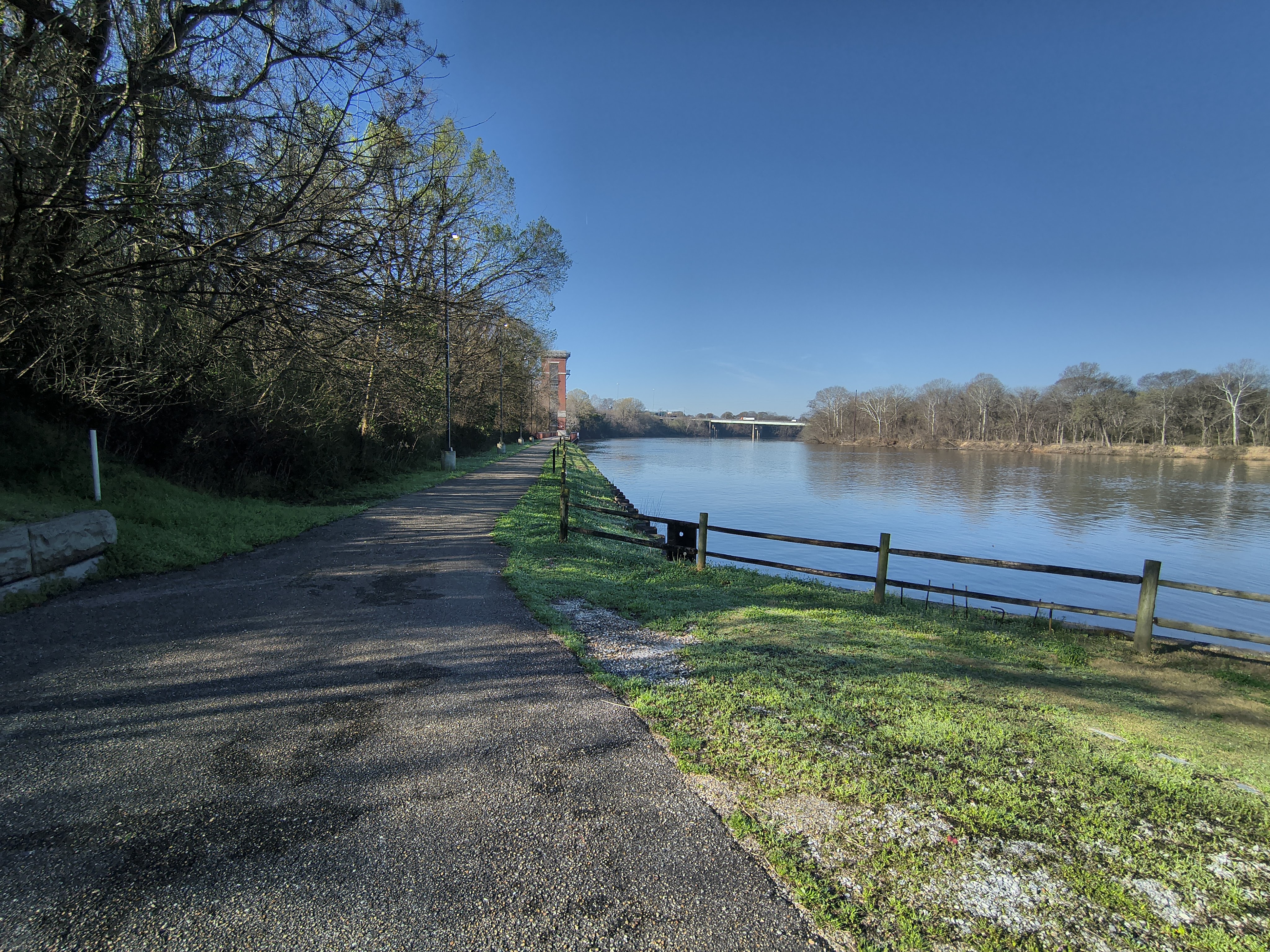
The land he occupied, within fifty feet of Union Station belonged to L&N railroad. It was covered with weeds before Thomas moved in. It was reported, “the railroads so appreciate his little adventure in trucking and tramp reducing that his water and coal is furnished and he is a welcome occupant of the land he claims as home.” As his health began to decline, railroad workers kept an eye on him. It was they who reported the man who “Lives in a little shack overhanging the banks of the Alabama River….is in a pitiable condition.” Their observations led to requests for assistance and donations on Thomas’ behalf towards the end of his life.
“Uncle Ed has one of the prettiest truck gardens in the South”
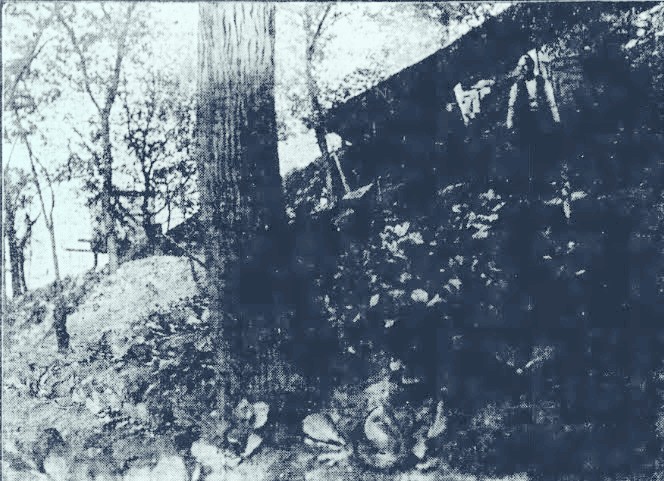
Ed Thomas supported himself by fishing and growing vegetables. He sold them at nearby markets and to people in the community. His green thumb superseded seasonal changes. His garden bloomed regardless. It was “ the prettiest garden in the city on the most dilapidated lot and in the most unheard of place.” Although he was alone and in less than desirable circumstances, Thomas was not forsaken. For all the beauty and bounty of his garden, he only took credit for tilling the soil. ‘When I sticks a shovel or hoe in the ground,” I seems to hear de Lord say, I’m wid you in dis’ and the plant comes right up through the ground.”
Days were marked by Thomas’ appearance at the markets with “an armful of bright, tempting vegetables.” At night he patrolled the bank of the river watching for the tide. Any plant, even young ones in jeopardy of being “carried with the tide towards the gulf,” he pulled.
Thomas liked solitude. I don’t know if he regularly attended church but he did pay his tithes. The preacher did not visit but some people from the church would “sometimes risk the mountainous visit” when the radishes were ready.
He constructed his ‘den of peace,’ with planks fished from the river. Uncle Ed called it his “shack.” Through some architectural feat, the home reportedly had a firm foundation although it was built on a bluff overhanging the river. One reporter said it “has a good ballast, in the form of Uncle Ed.” The hovel, built with tarred paper, rags, and trash was covered with butter bean vines that made a “beautiful setting.” The house leaked. It had no stove or mattress. Thomas slept on a bunk made of plank likely fished from the river, but it was home.
Old Ed Thomas and the Alabama had an understanding. When Alabama rose its waters, Ed retreated. When the waters receded, he returned. He always returned. During periods of retreat, he stayed in a house owned by the railroad until it was safe to return home.
At the close of December 1915, the river rose. At Montgomery, the river was projected to reach flood stage, rising more than four feet and reaching the subway.” (I didn’t know Montgomery had a subway) Thomas left as the river rose, “in order to escape drowning,” papers reported. “His household effects, garden and everything he has is underwater…He is a worthy object of charity, as he is old and in bad health.” In July 1916, the water rose again. This time the flooding was widespread, a hurricane hit the gulf. The Black Belt region, especially around Dallas, Thomas’ home county, were hit hard.
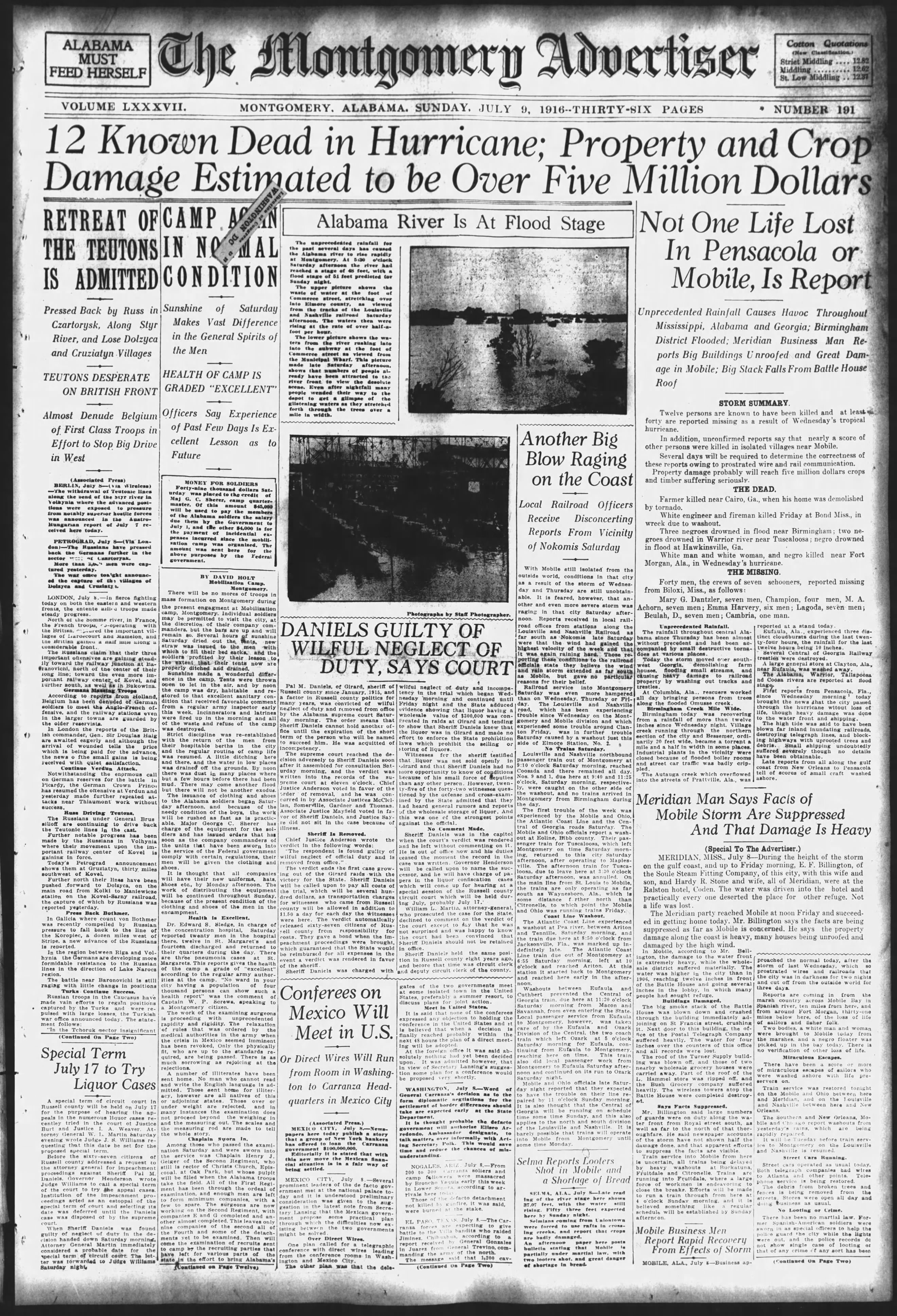
The waters eventually receded, but this time Ed did not return. Before the final flood, Ed was in poor health. At some point after his departure, he was hospitalized. Community members rallied around him and raised money. In December, his body finally gave out and he was welcomed into the “great beyond.” He died “at the negro hospital following a stroke of paralysis which came to him soon after the floods of the Summer, when he was driven from his dug-out home.”
Although I have only recently discovered Ed Thomas, I am almost certain his health is the only thing that would prevented him from fulfilling his part of the deal…returning.
Ed Thomas embarked on his solitude journey after his wife’s death. Thomas explained to a reporter that “He does not shun society, but he doesn’t like it.” “He once put his money in a society but when his wife died he got no insurance. Therefore he doesn’t like “society.” Yes, his wife’s death was a significant personal loss for him. But it was what happened afterwards that made him turn away. He bought a policy and paid his dues. When it was time to deliver the goods, the company reneged on the deal.
That one transaction so painfully and concisely encapsulates the experiences of black folks in America. Being born into slavery, forced to support the Confederacy, the hope that came with emancipation and the progress of Reconstruction…when it came time for America to pay it dues of equal opportunity for all…it refused to pay. He was robbed. He was robbed of his money, but also the dream America claims to offer.
We continue to be robbed. The demographic of people being robbed is only expanding.
Historically and personally speaking, I fully understand his disillusionment with society. I understand why he had no desire to participate in it beyond what was necessary for his survival. I get it. I am, quite literally, following in his footsteps. I’d much rather be alone and free to enjoy the rivers, bask in the sun, and extract stories from the archive, rather than participate in a program designed to extract every ounce of my being possible, and offer the absolute bare minimum as a return on investment. As a pop princess once so eloquently said, “thank you, next.”
“He suffers, but complains not.” Thomas lived in abject poverty but also in abundance.The peace cultivated with his river, his garden, and his hovel, is the kind of peace I seek. It is steady. It does not fluctuate with rising and falling of life’s tide. It is not dependent upon anyone or anything outside of myself. Hopefully I, like the formerly enslaved philosophe, can find the balance of being connected and in the world, while also being apart from it.
I walked riverfront and tried to see where Thomas house would have been. The papers said within fifty feet of the station. I took a few pictures and turned to walk back, but something caught my eye.
A single random flower. It had been picked and dropped on the concrete. I sat and took it all in. Two kindred spirits, over a century apart, both seeking solitude in the same space. The flower felt like an acknowledgement. He saw me and I saw him. My initial thought was to keep the flower forever, but then was like no…the appropriate thing to do would be to place it in the river that sustained us both.

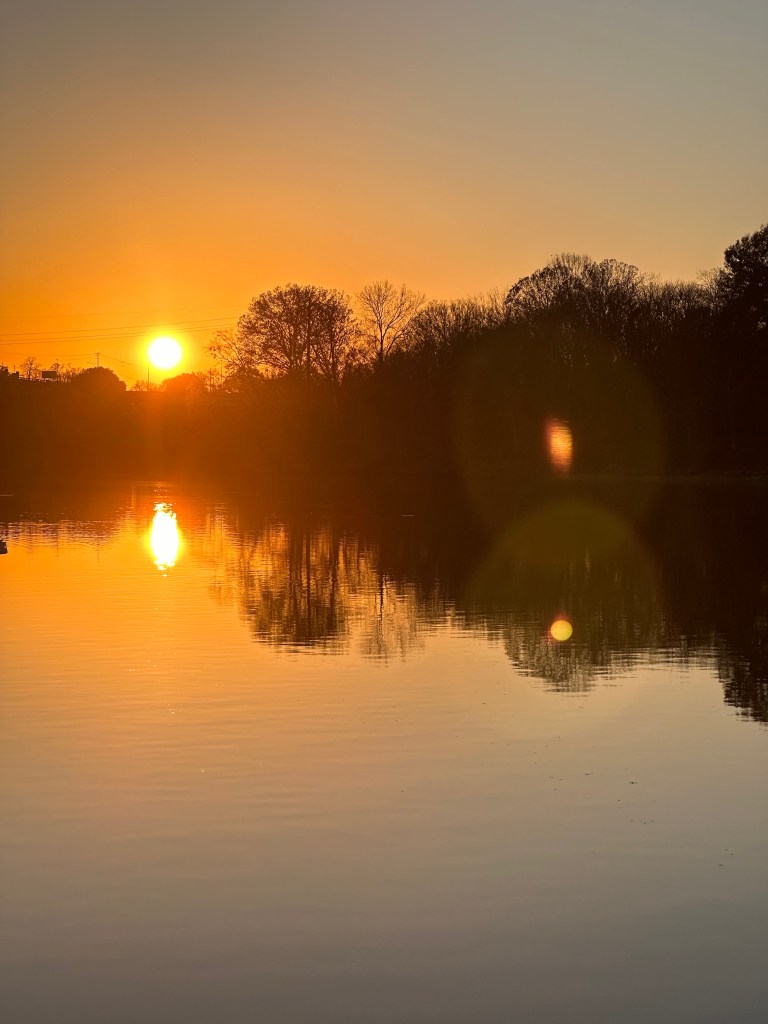
He lived a hard life, but in spite of it all “the old man is apparently happy. He sits there gazing out on the Alabama, his thoughts in the past.” Now, united in spirit we will sit and gaze together, the past, the present, and hopes for the future. Us and the Alabama…
Sources:
The Montgomery Advertiser April 19, 1914
Montgomery Times Dec 31, 1915
The Montgomery Advertiser Dec 31, 1915
The Birmingham News October 29, 1916
 preserve black alabama
Leave a comment